self-collected paps/hpv screeningand trauma-informed pelvic care in oak park
“I love getting my Pap!”
- No one ever
Well, other than the joy of self-care and knowing that you’re doing your part to prevent/catch cervical cancer early, most of us cervix-having humans are not very excited to go in for our Paps.
To make it more difficult, many of us grew up with the Pap as an annual chore — and all the more reason to put off getting preventive healthcare, since who wants a (often poorly done) speculum exam every year?! However, for decades now, we’ve had abundant evidence suggesting that yearly cervical cancer screening (the “Pap” test) is not beneficial. But there are loads of practicing clinicians that still subject their clients to outdated screening protocols.
Well, folks, I’ve got loads of good news — both for your general knowledge, and for you to guide finding the right local care for you!
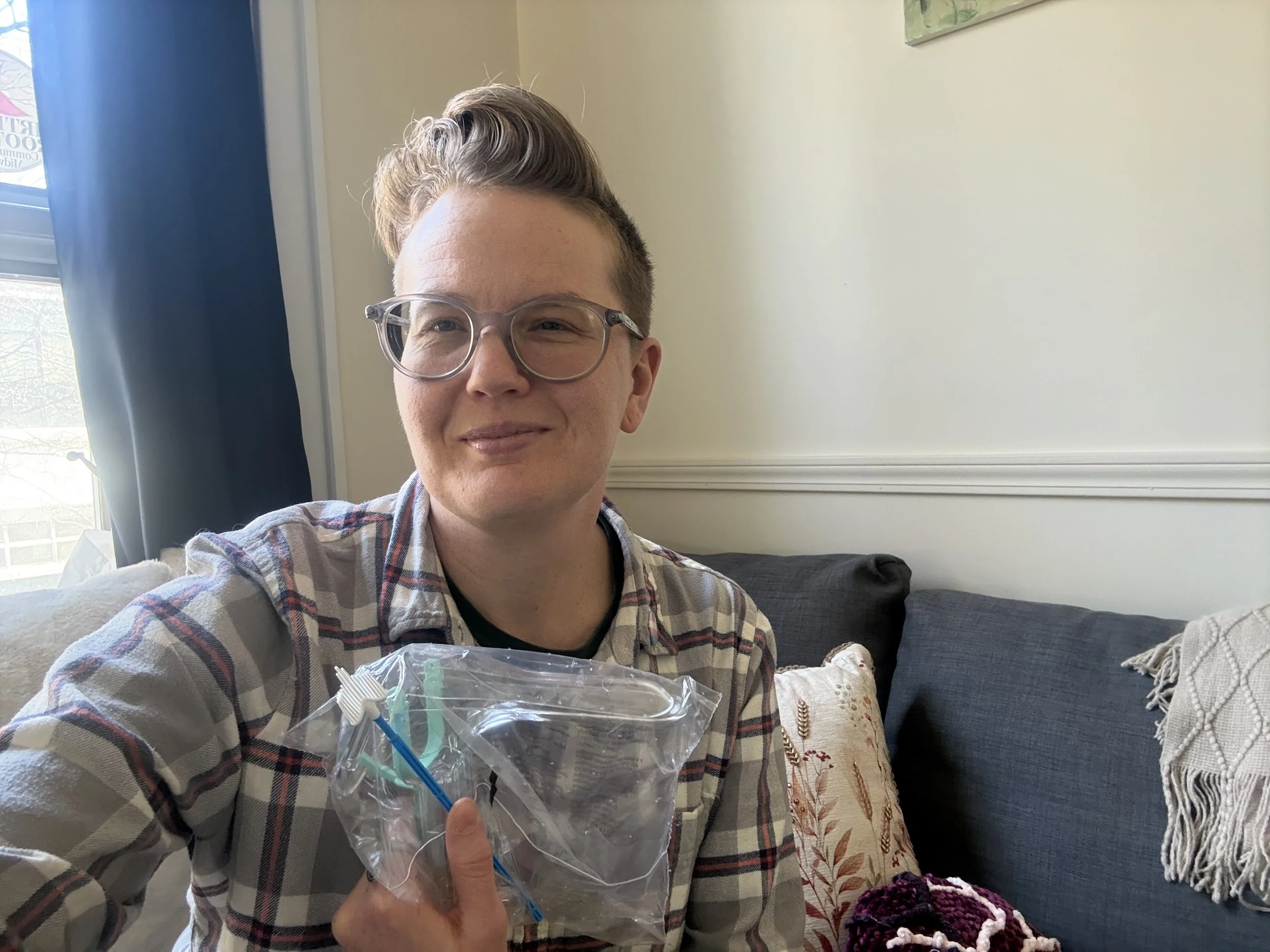
Midwife at your cervix!
What is the Pap?
So glad you asked! A Pap test is a way to check the cells of the cervix for cancerous changes caused by human pappilomavirus (HPV)
There are different ways to collect the cells. I favor using a soft plastic brush, but different labs offer different options
It’s NOT the same thing as a speculum exam or pelvic exam — it’s a specific test that may be done when a clinician places a speculum vaginally to see the cervix; but speculums can be used for other reasons too
When is a Pap done?
It’s recommended that Pap screening begins at age 21 for anyone with a cervix. (You can stop if you’ve had a hysterectomy that removes your cervix, if you don’t have a history of cervical cancer or high-grade dysplasia— very abnormal cervical cells).
From age 21-29, it’s done every 3 years
From age 30-64, it should be done every 5 years, with an HPV test added (called co-testing)
It can be safely discontinued at age 65 for someone that’s had adequate screening for the prior 10 years
It may be done as follow-up for prior abnormal screening results or after diagnostic workups or treatment, as for a colposcopy or LEEP procedure, etc.
Why should I get a Pap or HPV test?
Cervical cancer is preventable and easily treated if caught early
A main reason cited for deaths from cervical cancer is not accessing appropriate screening
Screening is recommended for anyone with a cervix is at risk regardless of history of receiving the vaccine against HPV or sexual activity, according to the latest guidelines
What kinds of providers offer Paps?
Most folks think of going to see a gynecologist — typically an MD or DO — for routine reproductive healthcare. Gyne providers can be great for the full spectrum of care, if you need more complex health management or surgery.
You can also see your family practice physician or nurse practitioner for routine Pap screening, or go to a family planning clinic for this kind of care, where Women’s Health Nurse Practitioners or other Advanced Practice Nurses may be the main provider type.
But guess what? Certified Nurse Midwives like myself are highly specialized in providing client-centered care that promotes physiology and celebrates your autonomy, while carving out lots of time for empowering education and holistic health along with providing routine health care like Pap screening.
What happens during a Pap?
Typically, the first step is to place the speculum vaginally/genitally, so the clinician can see your cervix. In order to get comfy using a speculum, some midwives like me will provide a speculum to clients to take home and try out. I also always work with my clients to use their breath to make placement more easeful.
If you’re into it, you can see your cervix with a hand-held mirror. Many midwives like me keep a mirror in the office for this! Some folks find it cool to see…while others are really not into it!
Many trauma-informed providers like myself do speculum exams without using footrests! Ask your provider if they have experience doing exams without footrests (also known as stirrups…but since we’re not talking about riding horses, that’s not in my healthcare vocab!); or if you can place the speculum yourself, if thats your preference.
The clinician then uses a swab/brush with a long handle to gather cells from the cervix. This can feel a little crampy/pinchy, but should only last about 5-10 seconds. Some folks have a little bit of spotting from the contact of the brush with the cervix.
What if I really, really don’t want a speculum, but I need my Pap?
Speculum exams can be extremely uncomfortable for lots of folks — whether due to gender feels, history of sexual trauma, modesty, or history of vaginal pain with internal stimulation/penetration. You’re in good company if that’s how you feel!
There are several FDA-approved Pap tests specifically for self-collection. If you’re just doing routine screening (not follow-up for an abnormal or having any symptoms like abnormal bleeding), and are otherwise considered “average risk,” self-collection without a speculum may be an option.
It’s your body - your choice
However, it’s good to know the recommended guidelines in order to understand some potential risks of getting Pap testing done without a clinician’s collection via a speculum exam
There’s limited guidance on using other Pap vial tests for self-collection, though it can be done
If you’re choosing self-collection, it’s recommended to do the screening every 3 years
What happens if it’s abnormal?
Evidence-based guidelines are developed to minimize over-testing while supporting early treatment.
Typical follow-up for screening Paps will vary depending on your age and prior test results. The most common follow-up steps include a repeat Pap (and/or HPV test) after a certain period of time; colposcopy (biopsy); to a more invasive procedure called a cone biopsy.
Follow-up Paps/HPV tests can be done with the original provider that does your Pap, while colposcopy and cone biopsy will need to be done with specialized equipment and providers. I refer to other clinicians for colposcopy and treatments.
Where can I learn more?
Trusted information on cervical cancer prevention, screening, and treatment can be found from the American Cancer Society, the American College of Obstetrics and Gynecology (ACOG), and the American Society for Colposcopy and Cervical Pathology (ASCCP).
I follow ASCCP guidelines in my practice, and appreciate the perspectives they bring on health equity in their guidelines.
And of course, you can schedule your well person care, including a Pap/HPV screening if you’re due for it, with me! I know this is intimate care, and taking time to build trust is essential prior to any exams.
